Amongst
the soggy rotting leaves
or between
the bowed grass blades
thrust
the tips of snowdrop
leaves
Post about a poem or the writing or publication of poems

Amongst
the soggy rotting leaves
or between
the bowed grass blades
thrust
the tips of snowdrop
leaves

Letters
Those love letters from the seventies
I could not bear to read again
and could not bear to throw
Those airmail forms
those tortured lonely twelve page laments
that I read and read so many times
in my cabin off Cape Town,
in Melbourne and Sydney:
So many words
So much love
But in the end
They were just ash
And I scattered them
Ashes to her ashes
First published in Mostly Welsh 2019 (Y Lolfa) p.92

Winter white. The cold wind across the fields
spoke only of snow and wearied him
prisoner in the cottage where his impatience yields
no words on the cold and barren purity of the snow
white paper, no words longing for their page longing
.
for their precise moment to mark the dreadful whiteness
that had come with winter’s snow and the ice that followed it,
their precise moment when reality’s niveous brightness
might be dispelled by their generous rush of verse, of
words spilling sliding rhyming across the paper’s snowy prospect
.
A poem partially inspired by the final word in the final volume – Quinx or The Ripper’s Tale – of The Avignon Quintet by Lawrence Durrell.

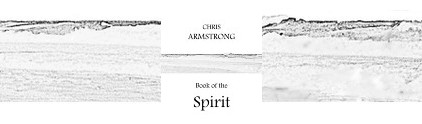
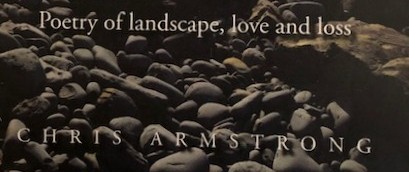
For those who have a copy of Book of the Spirit, it may be helpful to look at the notes and annotations that I have recently made available. The short collection of poems merges the secular with the theistic, while the language borrows from religions and there are references drawn from religious works. The notes may help with an understanding of sources and references. The pdf files can be downloaded from the Resources page.

The sea is ever present in my writing – both in my prose and in many of my poems. I spent ten years of my life at sea and, both before and after that time, the draw of swimming or surfing continued to take me to beaches. I was lucky to have spent most of my childhood on the Gower in South Wales so had ready access to wonderful beaches. Perhaps that explains – to some extent – the sea’s tidal pull.
Much of the story… much of the two stories in The Dark Trilogy is governed by the sea and my times on it: Book II is a play for voices that covers my first years at sea, particularly the three years when I was learning my trade. And the sea is also present in a number of the short stories that will be published early next years, perhaps nowhere more than in ‘The Endless Horizon’, but other stories too tell of ships in, or between, ports.
I am just completing my second full-length work of fiction – Trystan, which should be published sometime next year, and here, too, although I have set the action in a small town, the sea is very much a focus – always there in the background of the story.
And although the poems in my recently-published chapbook – Book of the Spirit – have another focus, lines in the first poem at least, do not escape the ocean:
…the future
becomes nothing but a sunlit ripple in the dark eternal wash of the sea
……until –
watching the sun sink below the horizon, time’s illusory rim, and the vast sea
that is the circle of our future existence wash its unknown waves to our feet
And the second poem picks up the theme:
And we are drops left on the shingle
Until the sea reclaims us for its own
I also have a longer collection of poems being published in 2023. Looking through the selection, I find that nearly 25% of the poems have some link with, lines about, the sea… including ‘Heatherslade’ – of which you may have an early sighting here:
Heatherslade
Where lies my blinding country of youth, that
cloudless demi-dream of some easy time
innocent of the weary world dark, time
fresh born beech bud green, time
joyous as the cuckoo echo across the fields, as
the eternal sea sparkle of the bay, as
I was eternal for a time?And then was freedom in my world, and time
was mine in that sun lit sea wet summer
and the waves were mine, and the sands golden
at my feet as I plunging had the surf
roll at my will, and the slow day was a time
long pebble pooled in the rocks where the sea and
deep were bounteous for my pleasureSun hot days stretched time and heaven was the blue
eternal sea as the hazed horizon conjured wave on
wave to the shore to foam and darken the tide line
gold to darker amber, the swell the surge that gives
renewal to the ever changing sands, that gives
new life to the creatures it strands, that gives
me joy as I poise board in hands, that givesmy body wave born to where she stands

There are only seventeen poems and 27 printed pages; but there are also four sections in Book of the Spirit!
An Introit is something sung at the beginning of a religious service – the section sets the scene, placing reader and writer alike within a world, reminding them of their insignificance, as drops in the grand scheme of things – in the ocean – as they try to understand, and in the case of the writer, try to express the beauty of communication, and thereby of destiny, fate and truth in mere words.
While I have made no attempt – it was never my intention – to produce a religious or quasi-religious service or order of service in the central section, the Sunyata, the poems do fall within the canon of a service. They do not form a liturgy but rather are a collection of the elements often found in religious services.
The three poems in Satori, are perhaps the most conventionally religious, and readers will probably recognise the themes/stories referenced. Perhaps this section might be thought of as equivalent to a sermon, moving the work towards a conclusion by exploring themes in ways that leave the congregation, the readers with something – perhaps enlightenment (which is what Satori means) – to ponder on their way home.
The final section – Apocrypha – contains two poems that are not truly a part of the book of praise but which seemed, to me, to follow on from it – to fit in with the general ethos.

This post launches my new collection of poems – Book of the Spirit – which was published this week. Further details and a link to buy a copy can be found on the Books page.
In developing this small collection – it was always destined to be a small collection, a chapbook – I wanted to celebrate – to write in praise of – writing, particularly the writing of poetry and love poetry especially, by creating a work in which the medium itself was the message, and by raising that message, that medium, on high. I suppose that I came to see in this venture a similarity with other celebrations. Particularly, in some ways, I could see parallels with that older and special celebration of praise, found in devotional traditions that glorify one incomparable certainty, one supreme entity, and that find their outlet, their medium, in a religious service. Eventually, that comparison shaped both the language and the structure.
Thus, perhaps inevitably, many of the poems merge the secular with the theistic – the word with the Word, as it were – so the language borrows from religions and there are references drawn from religious works.
The seventeen poems are divided into four sections, of which the second, longest part has works which fall into the canon of a service. I should emphasise that I have not tried to create a service, simply that the works are named for the more formal expressions of praise within a service.

An interlude is a short piece of writing or acting introduced between parts or acts – initially of miracle or morality plays – or added as a part of surrounding entertainment. When Trystan is published – sometime next year – readers will discover that there are eight interludes that surround and interrupt the main ‘story’ chapters. I will say more about this when the book is published. Meanwhile – between more important posts – here is a poem.
To you, readers, I say
I am no writer –
these words
placed themselves
on my page
to tell a story
To you, writers, I cry
I am no chronicler –
these tales
spun their web
through my mind
to make a memory
To you, poets, I sing
I am no rhymer –
these lines
etched their pattern
on my paper
to form a psalm
To you, who come, I whisper
I am no voice –
these sounds
lift their hymn
from the book
to sing your future

In The Dark Trilogy, I created a literary alter ego – Trystan Lewis – named Trystan as I had a vague idea when I began writing – all those years ago – to link him in some way with the Tristan in The Romance of Tristan and Iseult. I never found a way to make that work but kept the name! Lewis, the surname, after the old nickname I had been given when I first went to sea, Louis (as in Louis Armstrong or Satchmo). A few months ago I was reading an article about James Joyce which reminded me that Stephen Dedalus was Joyce’s literary alter ego and, in turn, that reminded me of my original plan… and I began plotting… planning… and a new book was born! While I have made no attempt to write a modern version of The Romance of Tristan and Iseult, all of the main chapters are named for the chapters in the Romance and each chapter has thematic links and some reference point to the original. Character names are all drawn from the original: for example, Trystan’s good friend George Knight is named for Gorvenal (the word means knight). The story follows Trystan and George through a twenty-four hour period and deals with fate and the downwards spiral of events caused by drink, much in the way of Charles Jackson’s The Lost Weekend. Although the story is centred in a small Welsh town, as with much of my writing the sea is central to, and surrounds, the story and among many, often hidden, literary allusions, Moby Dick is referenced at both the beginning (Trystan “sailed about a little [on] the watery part of the world”) and the end (“the great shroud of the sea rolled on”) of the story.
So Trystan lives on!
I do like the idea of extending story lines so, as well as Trystan, several other characters from The Dark Trilogy also appear in, and indeed are the subject of, some of my short stories.
I have a publishing programme planned and expect to publish a poetry chapbook very soon, before – early next year – the short story collection. Trystan and a further collection of poems should follow soon after that. [Order of publication may be subject to change!]
Watch this space!
To discern
our place
To commune
To see
beyond our close shadow of death
To focus
my poet mind
I need direction
a qibla
Or some beads to tell
to take refuge from my life:
A candle flame
Only the candle
Flame
Flickering
A journey into quietude
begins
Into that silence
comes tranquillity
And the absence of words
Serenity beyond words:
I become sentient -
conscious of only this moment in the flame of a grain of sand
Of the sun shining through golden autumn trees
Of the clearing mists
dissolving in the valley and above the hills
giving way to rain that fills the sky
so that the branches droop, dripping
as the wind rustles the upper boughs
and drops spatter on the window glass.
Of love
Peace
Perhaps, now, I am no longer physical
But have become a spiritual being
having a human experience
Writing
And in the writing
the words return
Originally published in Mostly Welsh (Y Lolfa 2019, pp.51-52)